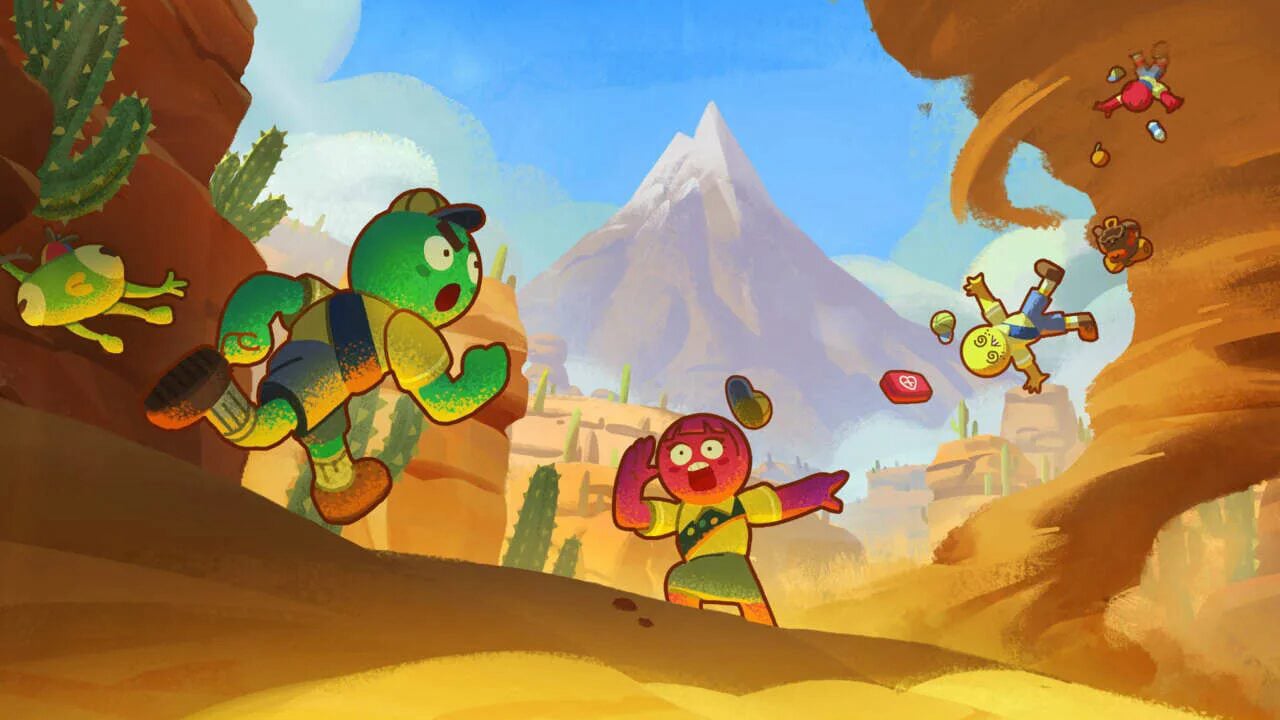
Best Team Play Experiences
Team play in co-op games has become one of the most defining aspects of modern multiplayer games, especially when people gather in games with friends for shared sessions that blend coordination, communication, and spontaneous decision-making. In many cases, the experience of team play is not defined by winning or losing, but by how smoothly or unexpectedly players adapt to each other inside co-op games. These moments often create a sense of flow where multiplayer games feel less like systems and more like shared environments shaped by human interaction.
One of the strongest elements of team play is the way it encourages players to understand roles without formal assignment. In games with friends, participants naturally fall into patterns based on intuition, experience, or preference. Co-op games support this organic structure by allowing flexibility, which makes multiplayer games feel dynamic rather than rigid. Over time, team play evolves into a kind of silent agreement where each player contributes in a way that complements others, even without explicit communication.
Another important aspect of team play experiences in co-op games is the development of trust. When players engage repeatedly in games with friends, they begin to anticipate each other’s behavior in multiplayer games. This anticipation reduces friction and increases efficiency, allowing team play to become smoother and more intuitive. Co-op games reward this growing familiarity, turning simple actions into coordinated sequences that feel almost automatic. In this way, multiplayer games become a space where trust is built through repetition and shared problem-solving.
Team play also introduces a unique emotional rhythm to games with friends. In co-op games, success is often shared, and failure is experienced collectively, which creates a different emotional structure compared to competitive multiplayer games. This shared emotional flow strengthens the bond between participants and gives team play a deeper meaning. Even small achievements in multiplayer games can feel significant when experienced through co-op games with friends who are actively collaborating.
In Brasil and many other regions, games with friends are often a primary form of digital social interaction, and co-op games play a central role in this environment. Multiplayer games provide the platform, but team play is what transforms that platform into a meaningful social space. People return to games with friends not only for entertainment but also for continuity in relationships. Co-op games become part of routine interaction, where multiplayer games serve as a background for ongoing collaboration and conversation.
The best team play experiences in co-op games often come from unpredictable situations where players must adapt quickly. In these moments, games with friends reveal how flexible communication can be, especially in multiplayer games that require rapid coordination. Team play becomes a real-time negotiation process where players adjust strategies, share information, and respond to changing conditions. Co-op games thrive in this environment because they allow mistakes to become part of the learning process rather than permanent setbacks.
Ultimately, team play in multiplayer games represents one of the most engaging aspects of co-op games, especially when experienced through games with friends. It combines structure and spontaneity, logic and emotion, individual action and collective outcome. Over time, these experiences shape how players understand cooperation not only in games but also in broader social contexts. Co-op games continue to evolve as spaces where multiplayer games support meaningful interaction, and team play remains the core element that transforms simple gameplay into shared experience.